
UK auto rules: £4,000 credit proposed for bidirectional EV charging
A government consultation suggests carmakers could earn ZEV mandate credits by installing grid-export technology, potentially allowing more petrol sales while environmental groups warn the incentive is premature.
By Jade Thompson ·
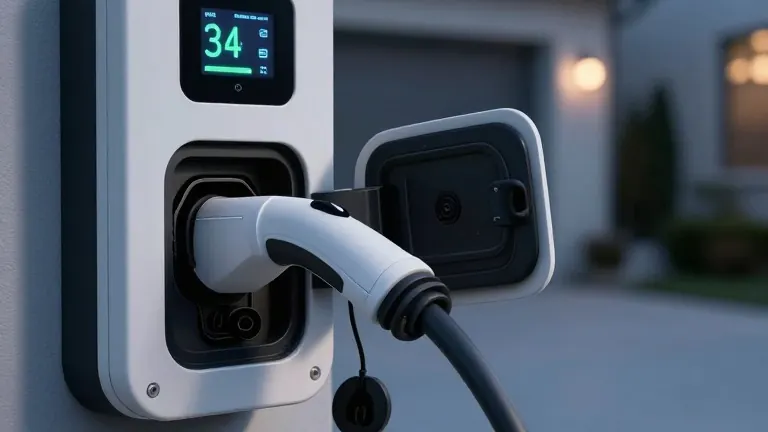
The UK government is considering offering carmakers a financial credit of approximately £4,000 per vehicle for installing vehicle to grid, or V2G, technology. The proposal emerged from a review of the zero-emission vehicle mandate, with the public consultation closing on Friday, October 23.
Under the draft rules, manufacturers would earn a credit for selling electric cars equipped with bidirectional charging hardware. This credit would offset the number of pure electric vehicles the company is required to sell to avoid fines under the mandate. The mechanism would effectively allow firms to sell additional petrol models while remaining compliant with current targets.
The technology enables drivers to store electricity during low-demand periods and sell it back to the grid during peak times. Proponents argue this helps balance supply and demand, reducing reliance on gas power plants. The National Energy System Operator estimates that V2G vehicles could provide 1.2 gigawatts of power by 2030, a figure that could rise to 41 gigawatts by 2050. That capacity would cover more than a quarter of peak energy demand in Great Britain.
Critics argue the incentive structure rewards installation rather than usage. Ben Nelmes, chief executive of the New AutoMotive thinktank, noted that the hardware costs manufacturers a few hundred pounds to fit. He stated that one or two credits worth around £4,000 each would hand manufacturers thousands per car, even though few drivers own the expensive chargers required to use the feature. Nelmes said ministers should ensure drivers and billpayers benefit, not carmakers' shareholders.
Vicky Edmonds, chief executive of the Electric Vehicle Association England, described the proposal as premature. She said only a fraction of the millions of EV drivers in the UK currently use V2G or storage technologies. Edmonds argued that consumers are still focused on immediate costs and daily needs, making it too early to give manufacturers credits for a technology not yet tested at scale.
Some drivers already participate in similar schemes through providers like Octopus Energy in the UK, Renault in France, and BMW in Germany. Octopus Energy claims participants could save £620 annually. The government is also preparing to cut overall EV sales targets, a move environmental groups say could result in an additional 147 million tonnes of carbon emissions by 2050.
Source: The Guardian