
Israel votes Tuesday as frontrunners agree on Gaza and differ on courts
Candidates largely support the ongoing war and reject a two-state solution, leaving domestic power and judicial control as the main dividing lines for voters.
By Rohan Mehta ·
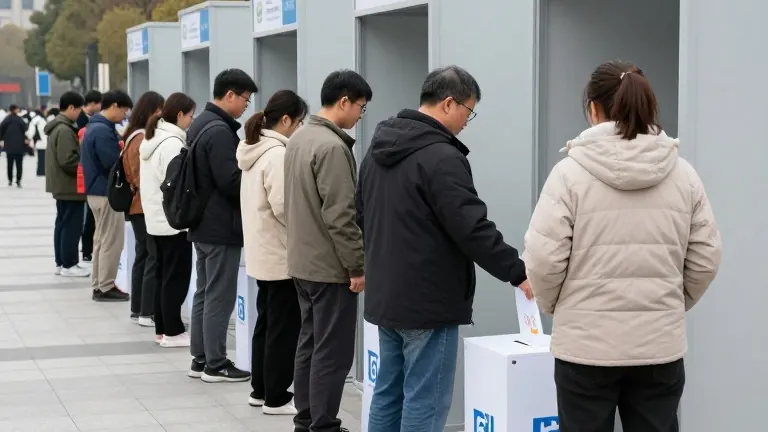
Israelers go to the polls on Tuesday, October 27, to decide the next government.
The election is widely viewed as a pivotal moment for the country. However, the leading candidates show little disagreement on foreign policy. None of the top contenders has challenged the war in Gaza that began after the October 7, 2023, attack by Hamas. They also support the recent military operations against Iran. Most candidates have not offered a specific plan for a two-state solution or a settlement for Palestinians under occupation.
The primary conflict is domestic. Voters are choosing between Prime Minister Benjamin Netanyahu's hard-right government and a loose coalition of opponents. The current administration operates with limited judicial oversight, a situation Netanyahu has long criticized. The opposition coalition promises a similar policy agenda but intends to operate within the law. They aim to remove the more extreme elements of the current government.
The status of the two-state solution remains a point of contention. Israel committed to working toward this goal in the Oslo Accords of the 1990s. Few candidates appear ready to fulfill that pledge. The government faces accusations of supporting settler attacks in the West Bank and building in occupied territory. This includes the E1 settlement plan, which ministers say will end the possibility of a Palestinian state. Netanyahu stated, "there will be no Palestinian state." Gadi Eisenkot of the Yashar party called the two-state principle "a mistake." Finance Minister Bezalel Smotrich urged the next government to cancel the Oslo Accords and pursue sovereignty. Yair Golan, leader of the Democrats party, said a leap to two states is impossible while society is in trauma. He pointed instead to "civil separation and security responsibility."
Conscription of the ultra-Orthodox, or Haredi, population is another major issue. The economic and human costs of the wars have raised the profile of this debate. Netanyahu relies on two Haredi parties, Shas and United Torah Judaism, for support in the Knesset. These parties have demanded legislation to overturn a Supreme Court ruling from June 25, 2024. That ruling shielded ultra-Orthodox youth from the draft. After approximately 40 Haredim were arrested this month for avoiding conscription, Netanyahu called the arrests "a deliberate attempt to harm the process of drafting Haredim without coercion." Aryeh Deri, leader of Shas, said his party would not join any government unless the status of yeshiva students is regulated. Eisenkot framed the vote as a choice between "Netanyahu's draft-dodging government" and a government of conscription. Avigdor Liberman of Yisrael Beiteinu described Netanyahu as "a hostage to the draft evaders."
The judicial overhaul remains a flashpoint. Days after taking office in 2022, the government unveiled a plan to curb the courts. This triggered months of mass protests in 2023 before the Gaza war interrupted them. The coalition has passed measures changing how judges are appointed. In July, a law stripped Attorney General Gali Baharav-Miara of many powers. The government can now reject her legal advice and choose its own lawyers in court. Both measures are scheduled to take effect after the election. Most of the opposition has vowed to reverse them. The government has also boycotted Chief Justice Isaac Amit. Critics call this an assault on democracy by a prime minister facing a corruption trial. Justice Minister Yariv Levin calls the election a historic chance to finish the job.
Netanyahu argues that Israel needs "we the people," not "we the judges." He says the judiciary must not crush the Knesset or the executive. Naftali Bennett, co-leader of the Together alliance and a former prime minister, pledged to cancel all the "legal revolution laws" as soon as the Knesset convenes.
Accountability for October 7 has dominated the campaign. The killing of more than 74,000 people in Gaza has been absent from the platforms of the two main alliances. Inquiries into security failures led Chief of Staff Herzi Halevi to announce his resignation in January 2025. A bitter dispute with the prime minister ended with Shin Bet head Ronen Bar leaving in June 2025. No comparable inquiry has examined Netanyahu's own role, despite reports that the UAE and Egypt warned him before the attack. Eisenkot said Netanyahu "was warned and did not act" and promised a State Commission of Inquiry. Netanyahu told the Knesset his government wants an inquiry with "as broad public support as possible." The proposed government-led inquiry never reached its final reading and has been deferred to the next session.
Source: Al Jazeera